Dropshipping has a video problem. The ads that sell on TikTok and Reels show a real person holding the product and talking about it. But the product sits in a supplier’s warehouse, samples take weeks to arrive, and by the time you could film one, the trend may be gone.
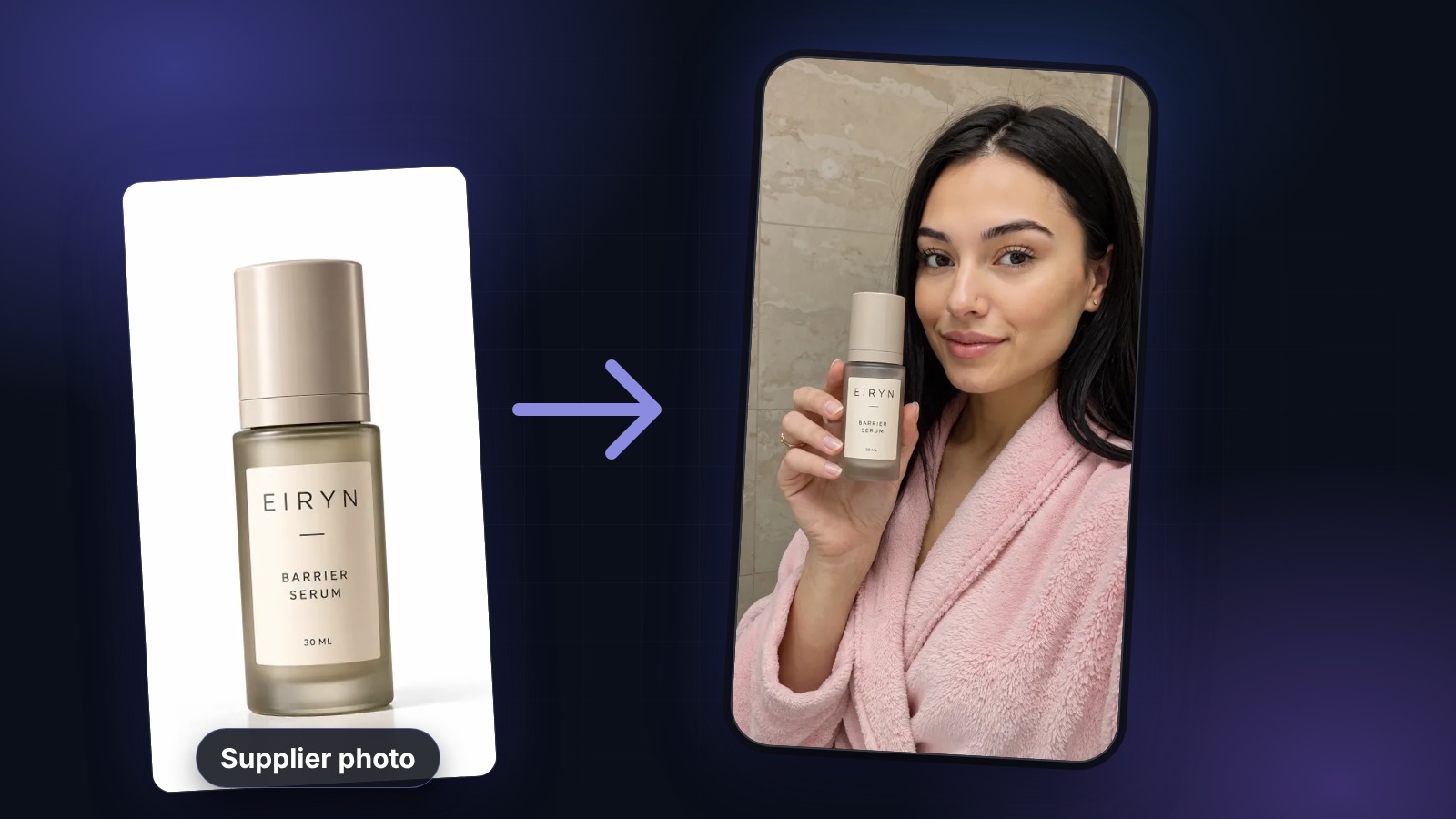
So most dropshippers end up with slideshows of supplier photos or recycled clips from other stores. Both look cheap, and both get ignored. This guide shows how to make a UGC-style ad from a single supplier photo, where an AI avatar holds the exact product you sell, and how to use it to test products fast without wasting your ad budget.
Why product-in-hand matters for dropshipping ads
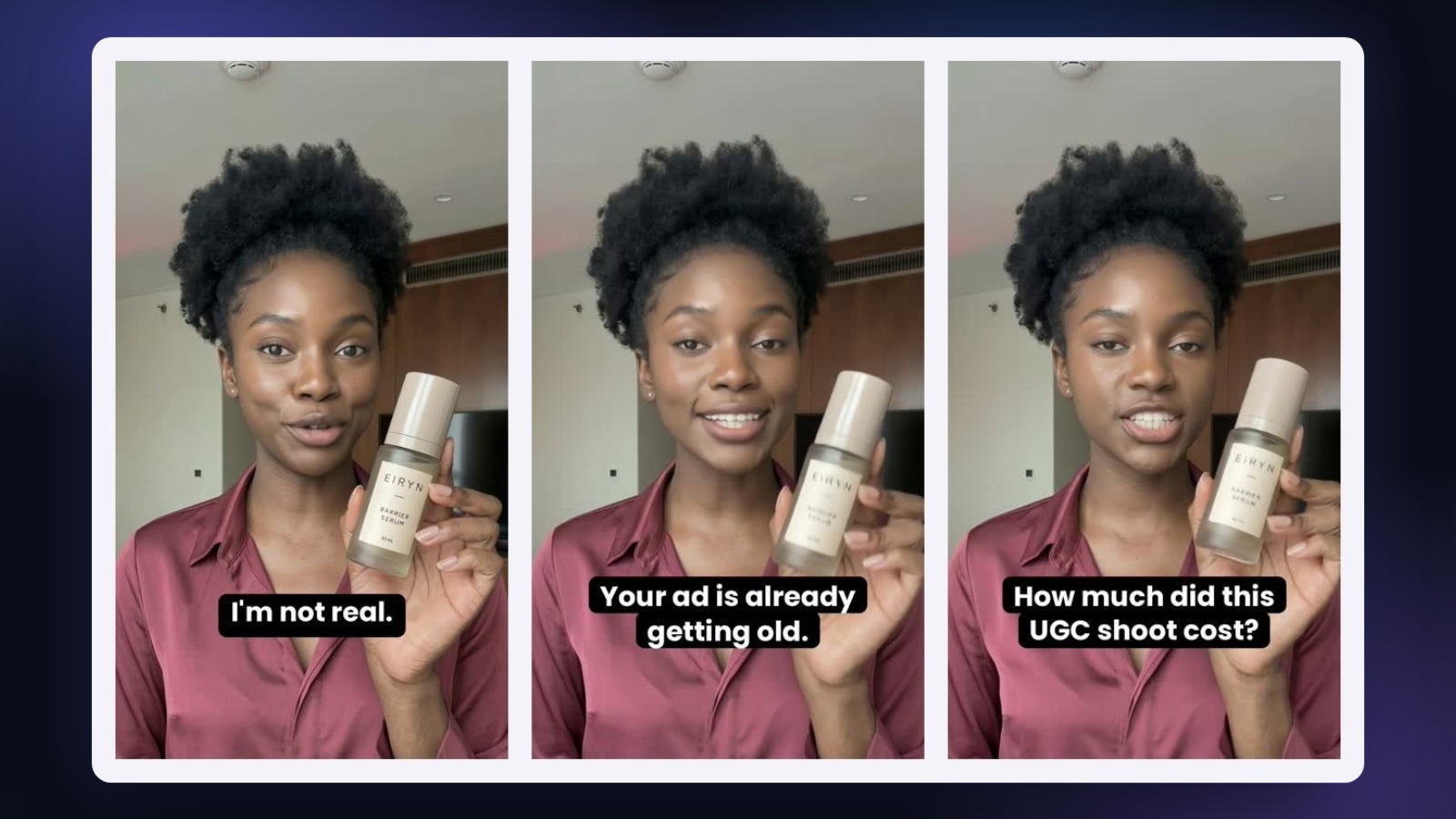
Viewers decide in a second whether an ad feels like a recommendation or an ad. A person holding the product, turning it to the camera and pointing at the detail that matters reads as a recommendation. A generic talking head next to a product shot reads as an ad.
For dropshipping there is a second reason. Your buyer will receive the product from the supplier, so the ad must show exactly that product. Not a similar one, not an AI redraw. When the item in the video matches the item in the box, you get fewer refunds and fewer angry comments.
Step 1. Get a clean photo from your supplier
Everything starts with the photo, and supplier photos are often messy. Pick or ask for one that has:
- One product only, not a collage or a bundle shot.
- No watermarks, text overlays or price stickers.
- The product front-facing, label toward the camera, packaging closed.
- A plain background and even light. If your supplier only has busy photos, ask for a clean one. Most will send it within a day.
Step 2. Write three hooks per product
In dropshipping you are testing products and angles at the same time, so speed matters more than polish. For each product, write three short first lines that attack the purchase from different sides:
If your cables are always tangled, look at this.
I didn’t think this would actually work.
Guess how much this cost.
Keep the rest of the script the same, so you know which hook made the difference. Our guide on how to write a TikTok hook goes deeper.
Step 3. Generate the ads in UGCABC
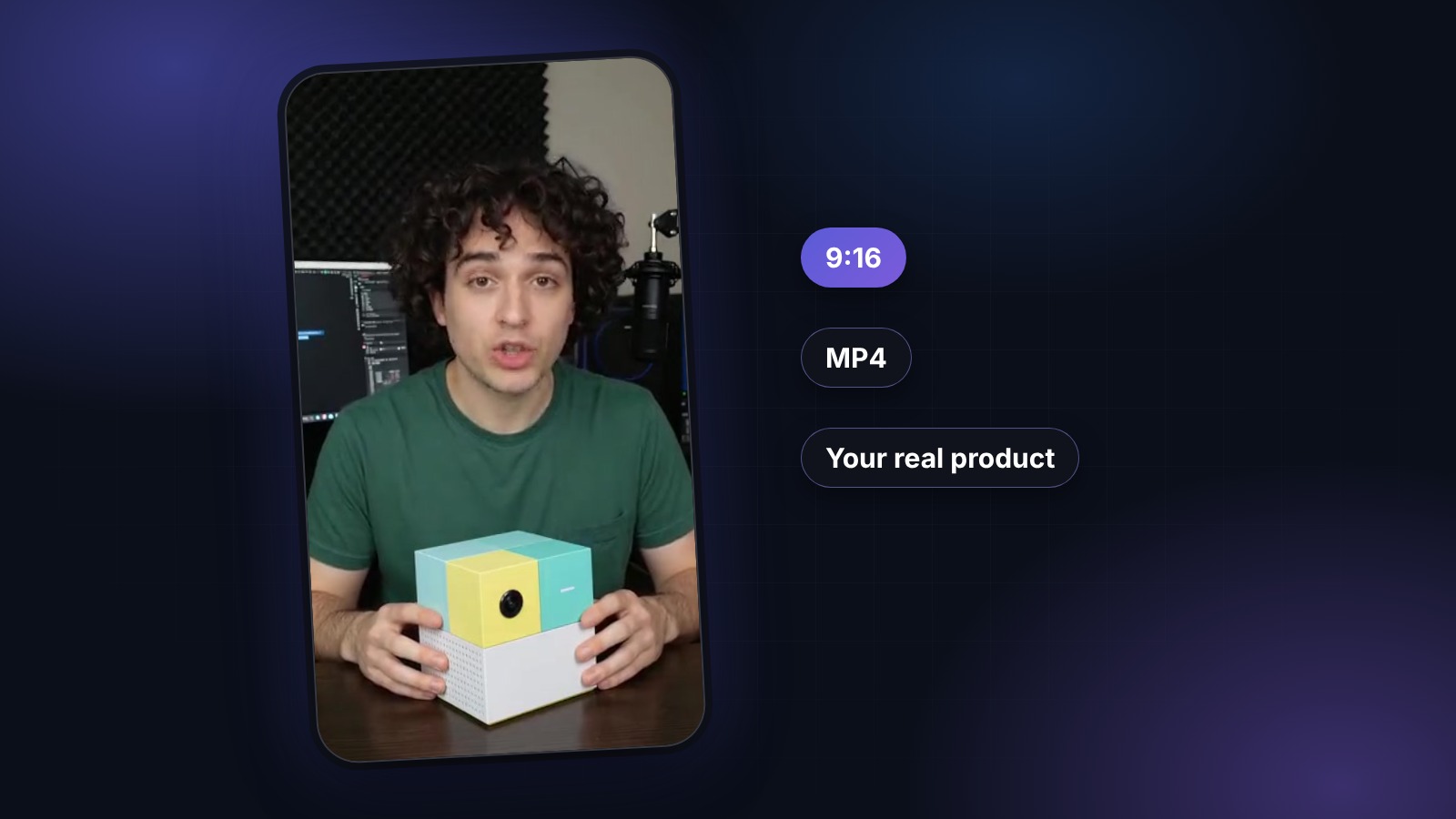
In UGCABC, upload the supplier photo to Product Ad, choose an avatar that looks like your buyer, and generate. You get a 9:16 video for TikTok, Reels and Shorts where the avatar holds your real product, with captions and a voiceover in 30+ languages, which helps if you sell in several countries.
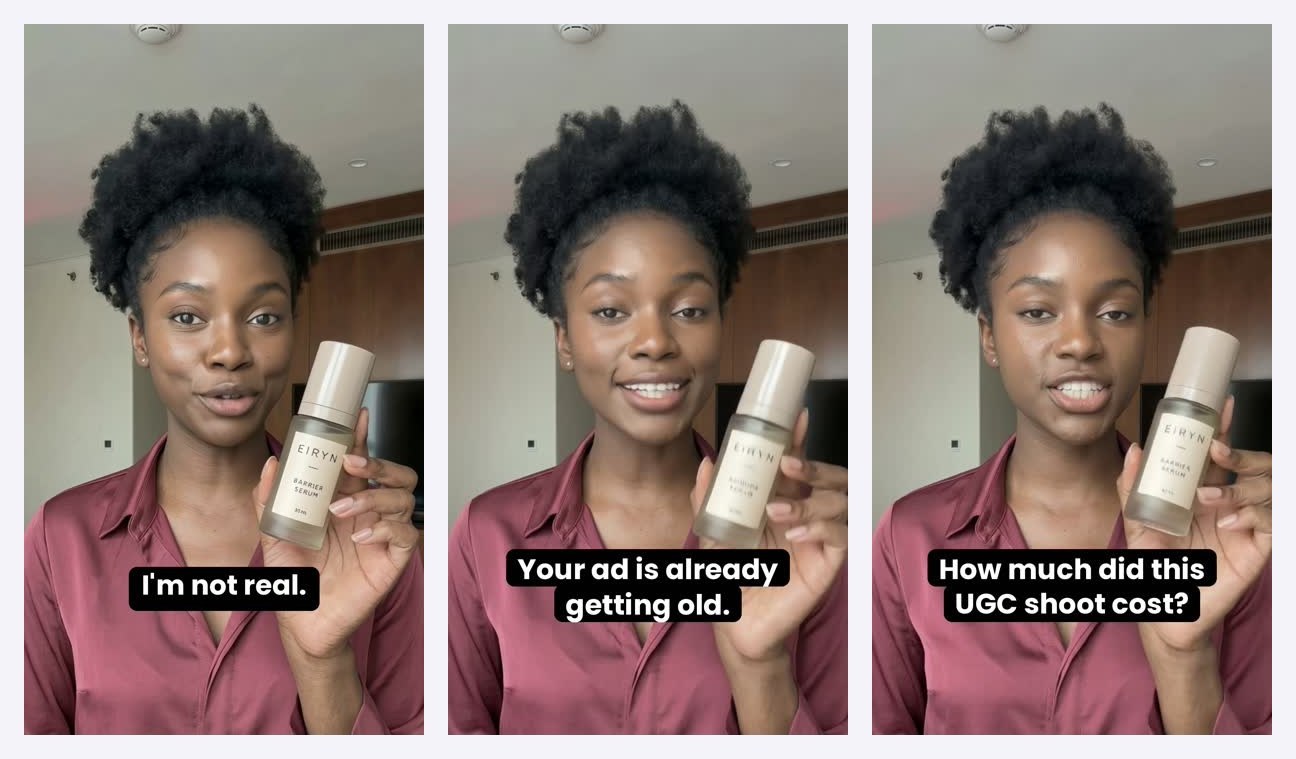
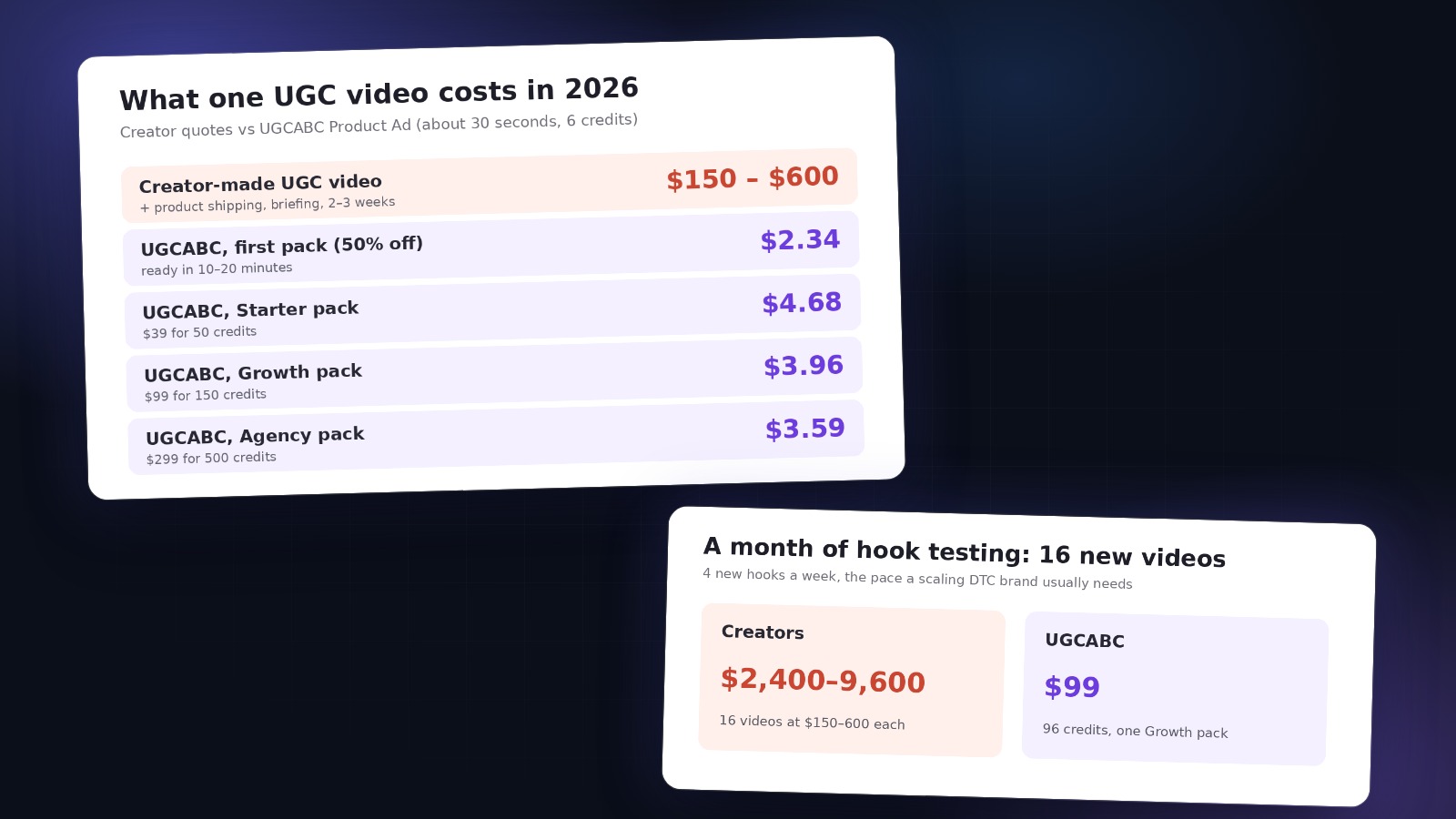
The first three previews are free. After that a finished video starts at $2.34 to $4.68 depending on the pack (6 credits for about 30 seconds), with no subscription and credits that never expire. That matters for dropshipping, where you test in bursts: ten products one week, nothing the next.
Step 4. Test products, not just ads
Here is a simple loop that keeps spending under control:
- Make three videos per product, one per hook.
- Run them with a small daily budget each for two or three days.
- Kill the product if none of the three gets a decent click-through rate. A product that no hook can sell is usually the product’s problem, not the ad’s.
- For the winner, make five more variants with new hooks and avatars, and scale those.
Stay inside platform rules
AI ads are allowed on TikTok and Meta, but both platforms now care about disclosure:
- TikTok: requires advertisers to label ads with realistic AI-generated people or voices using its AI disclosure setting in Ads Manager. Unlabeled AI ads can be rejected, and repeated violations can lead to account restrictions.
- Meta: labels AI-generated or AI-edited ads automatically in the “About this ad” menu, based on its own tools and on content metadata.
- Testimonials: don’t present the avatar as a real customer with a personal story, like “I’ve used this every day for three months”. Use it to demonstrate and explain the product. Fake testimonials break advertising rules and consumer protection laws in most countries.
Rules change often, so check the current policy of each platform before you launch. Our article on C2PA and AI ad disclosure explains the background.
What it costs compared with creators
A creator-made UGC video usually costs $150 to $600, plus a sample and two or three weeks of waiting. For a dropshipper testing ten products a month with three hooks each, that’s 30 videos, which is out of reach for most stores. With AI the same 30 videos start at roughly $70 to $140. The full comparison is in our UGC ad cost breakdown.
Try it with your next product
Take the supplier photo of the product you want to test next and create a free preview. You’ll see your product in an avatar’s hands in a few minutes. New accounts get 50% off the first credit pack for 48 hours.